
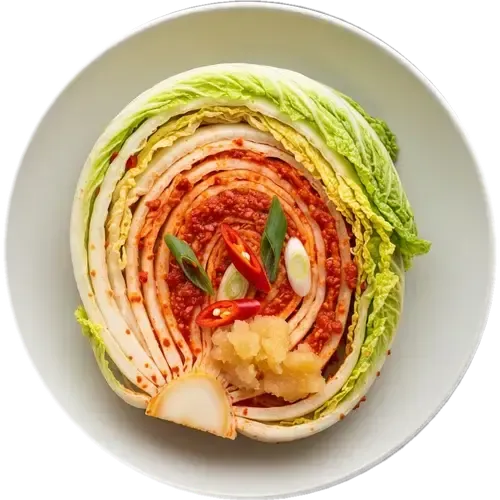
Kimchi
This classic Korean kimchi is a bright, tangy, and spicy fermented cabbage that balances heat, umami, and a hint of sweetness. Cru... Show more
 Traditional Korean Recipe
Health Grade
S+ · Outstanding
Rating
4.2
Time
3 hrs
Price
0,51 €
Calories
74 kcal
low calorie
healthy
nutritious
meal prep
Ingredients
Method
For 12 servings
Adjust servings
For salting the cabbage
 2 Napa Cabbages, baechu; about 2.5–3 kg total
 180g Korean Sea Salt, coarse (cheonil yeom)
For the porridge (binder)
 240ml Water
 2 tbsp Sweet Rice Flour, chapssal garu
 1 tbsp Sugar
For the seasoning paste and fillings
 12 cloves of Garlic, minced
 1 tbsp Ginger, fresh; minced
- 1 cups Korean Red Pepper Flakes, gochugaru; (~100 g); adjust to taste
 120ml Korean Fish Sauce (Aekjeot), aekjeot
 2 tbsp Salted Fermented Shrimp, saeujeot; finely chopped
- 400g Korean Radish, mu; cut into matchsticks
- 6 Scallions, cut into 3–4 cm pieces
- 1/2 small Onion, grated or pureed
 1/2 Asian Pear, grated (about 1/2 cup)
Nutrition
Per Serving.
Calories
74 kcal
4% of Daily kcal
Protein
4.4 g
9% RDI
Fat
1.5 g
0.3g sat fat
Carbs
14 g
5% RDI
Sugar
5.3 g
11% RDI
Fiber
4.1 g
14% RDI
Salt
4 g
79% RDI
Quality Profile
Scored against dietary guidelines.
Tap rows for a deeper breakdown.
Composite score - weighted by current nutrition science
S+ · 10.0 / 10
What others say

Click to rate

spice_and_dice
5 months agoFinally, a recipe that uses the sweet rice flour porridge binder properly—most people skip this and miss out on that critical viscosity. Adding the Asian pear is essential for the enzymes that fuel the Lactobacillus during fermentation. Excellent base.