Calories
94 kcal
5% of Daily kcal · low-calorie
Protein
6.7 g
13% RDI
Fat
2.9 g
1.6g sat fat
Carbs
10 g
4% RDI
Sugar
8.1 g
16% RDI
Fiber
0.1 g
0% RDI
Salt
0 g
1% RDI
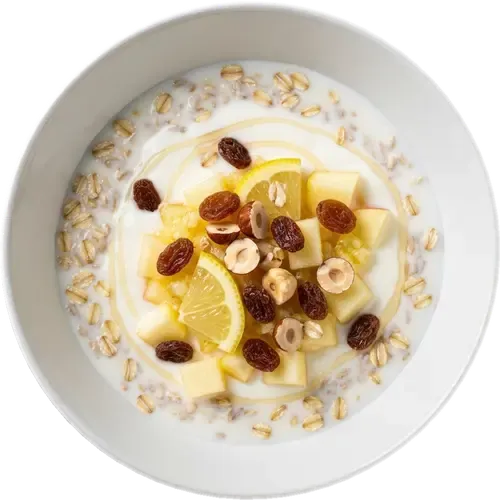
Yogurt is a cultured dairy product used around the world — from Mediterranean raitas to Middle Eastern laban — prized for its tangy flavor and creamy texture and commonly eaten plain, with fruit, or used as a sauce or dip. It is often used in both savory and sweet recipes and is known for its cooling, thick consistency and versatile culinary role. As a source of nutrition, Yogurt provides 6.67g of protein per 100g, delivering high-quality amino acids and helping with fullness; it also supplies modest amounts of iodine and vitamin B12. Because it is a fermented dairy, it offers substantial protein quality and typically keeps you feeling satisfied, though it contains little fiber. The fat content includes some saturated fat, so choosing lower-fat or strained varieties can reduce that while preserving protein.
Vegetarian · Gluten free · Unprocessed · ~0.40€/100g
Kinome Health Grade
Fair
-
Macronutrients per selected portion. Averaged from verified sources.
5% of Daily kcal · low-calorie
13% RDI
1.6g sat fat
4% RDI
16% RDI
0% RDI
1% RDI
Scored against dietary guidelines. Tap rows for a deeper breakdown.
Composite score - weighted by current nutrition science
C- · 5.4 / 10
Ingredients that rank higher on the overall quality profile and might substitute well in some recipes.
Top-rated recipes across the kinome library.
Yogurt is rated moderate (Health Grade C-) per 100g and can be part of a balanced diet.
Yogurt is NOVA 1 - Unprocessed.
Yes, Yogurt is gluten free.
100g of Yogurt contains 94 kcal, 6.67g protein, 10.2g carbohydrates, 2.87g fat, and 0.1g fiber.
Yes, Yogurt is vegetarian but not vegan.