Calories
140 kcal
7% of Daily kcal · low-calorie
Protein
19 g
38% RDI
Fat
5 g
1.6g sat fat
Carbs
0 g
0% RDI
Sugar
0 g
0% RDI
Fiber
0 g
0% RDI
Salt
0.2 g
3% RDI
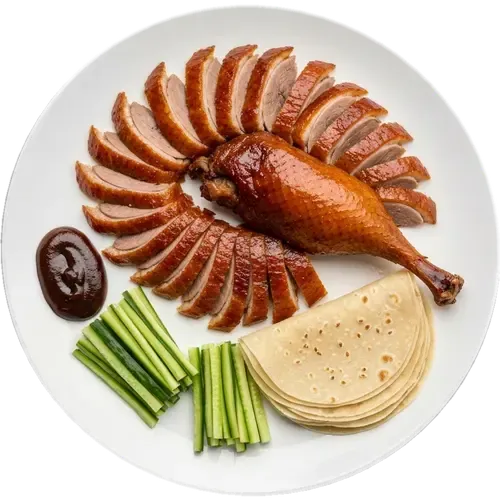
Duck is a flavorful poultry often used in European and Asian cuisines — prized for its rich taste and crisped skin when roasted or pan-seared. It appears on menus as whole roasted birds, confit, or in sliced preparations where the dark meat and fat contribute deep savory notes. Nutritionally, Duck is a concentrated source of high-quality protein, providing about 19g of protein per 100g, with relatively low carbohydrates. It also supplies appreciable monounsaturated fats and some omega-3s, as well as B vitamins like niacin that support energy metabolism. From a health perspective, duck offers an excellent amino acid profile and is more nutrient-dense than many processed meats; choosing trimmed or skin-removed portions and lighter cooking methods (roasting, grilling) can keep it a wholesome choice within a balanced diet.
Lactose free · Gluten free · Unprocessed · ~0.90€/100g
Kinome Health Grade
Optimal
-
Macronutrients per selected portion. Averaged from verified sources.
7% of Daily kcal · low-calorie
38% RDI
1.6g sat fat
0% RDI
0% RDI
0% RDI
3% RDI
Scored against dietary guidelines. Tap rows for a deeper breakdown.
Composite score - weighted by current nutrition science
S- · 9.2 / 10
Ingredients that rank higher on the overall quality profile and might substitute well in some recipes.
Top-rated recipes across the kinome library.
Yes, Duck is exceptionally healthy, earning an S Health Grade. It is high in protein with 19g per 100g.
Duck is NOVA 1 - Unprocessed.
Yes, Duck is lactose free.
100g of Duck contains 140 kcal, 19g protein, 0g carbohydrates, 5g fat, and 0g fiber.
Yes, Duck is gluten free.