Calories
16 kcal
1% of Daily kcal · low-calorie
Protein
0.7 g
1% RDI
Fat
0.1 g
0g sat fat
Carbs
3.6 g
1% RDI
Sugar
1.7 g
3% RDI
Fiber
0.5 g
2% RDI
Salt
0 g
0% RDI
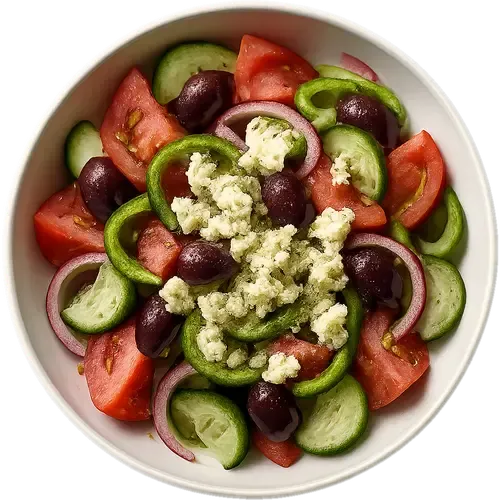
Japanese Cucumber is a crisp, mild-flavored vegetable used widely in salads, sandwiches and Mediterranean, Middle Eastern and Asian cuisines; it’s prized for its cooling, watery texture and refreshing crunch. It’s very low in calories and provides a modest amount of minerals and vitamins — notably 16ug of vitamin K per 100g — along with small amounts of fiber and potassium. Nutritionally, Japanese Cucumber is a light, hydrating choice that contributes vitamins and minerals to a meal but contains only small amounts of pigment-based antioxidants, so pairing it with colorful vegetables will boost overall antioxidant and fiber intake.
Vegan · Lactose free · Gluten free · Unprocessed · ~0.13€/100g
Kinome Health Grade
Optimal
-
Macronutrients per selected portion. Derived from Cucumber.
1% of Daily kcal · low-calorie
1% RDI
0g sat fat
1% RDI
3% RDI
2% RDI
0% RDI
Scored against dietary guidelines. Tap rows for a deeper breakdown.
Composite score - weighted by current nutrition science
S- · 9.1 / 10
Ingredients that rank higher on the overall quality profile and might substitute well in some recipes.
Top-rated recipes across the kinome library.
Yes, Japanese Cucumber is exceptionally healthy, earning an S Health Grade. It is rich in protective compounds.
Japanese Cucumber is NOVA 1 - Unprocessed.
Yes, Japanese Cucumber is gluten free.
100g of Japanese Cucumber contains 16 kcal, 0.7g protein, 3.6g carbohydrates, 0.1g fat, and 0.5g fiber.
Yes, Japanese Cucumber is vegan.
Yes, Japanese Cucumber is lactose free.