Calories
213 kcal
11% of Daily kcal · moderate-calorie
Protein
2.4 g
5% RDI
Fat
2.3 g
0.4g sat fat
Carbs
46 g
17% RDI
Sugar
11 g
21% RDI
Fiber
8.1 g
27% RDI
Salt
0 g
0% RDI
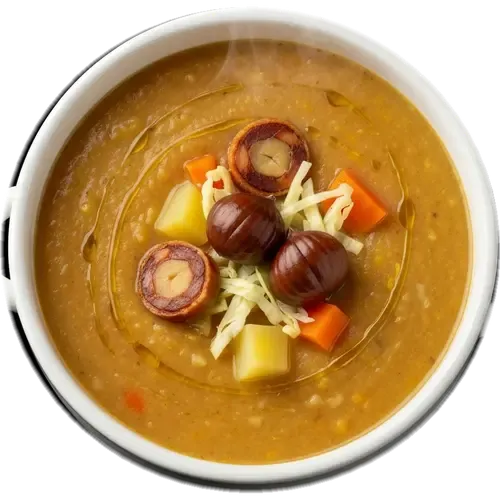
Chestnuts are the edible nuts of the chestnut tree (Castanea species) commonly used across European and East Asian cuisines — roasted, boiled, or pureed into sweets and savory dishes. They are known for their starchy, slightly sweet texture and are often enjoyed whole as a snack or incorporated into stuffings and desserts. Nutritionally, Chestnuts are relatively low in fat for a nut and provide a good amount of complex carbohydrate and dietary fiber; they also supply a notable amount of vitamin C (26.7mg per 100g), which is uncommon among nuts. This combination makes them a filling, energy-providing ingredient with more of a potato-like profile than most oil-rich nuts. Compared with many other nuts, Chestnuts have a favorable fat profile (lower total and saturated fat) and contribute useful fiber and micronutrients, making them a wholesome, plant-based option for adding bulk, flavor and vitamin C to meals.
Vegan · Lactose free · Gluten free · Unprocessed · ~0.70€/100g
Kinome Health Grade
Excellent
-
Macronutrients per selected portion. Averaged from verified sources.
11% of Daily kcal · moderate-calorie
5% RDI
0.4g sat fat
17% RDI
21% RDI
27% RDI
0% RDI
Scored against dietary guidelines. Tap rows for a deeper breakdown.
Composite score - weighted by current nutrition science
A+ · 8.3 / 10
Top-rated recipes across the kinome library.
Yes, Chestnuts are very healthy with a Health Grade of A+. They are a good source of dietary fiber (8.1g per 100g).
Chestnuts are NOVA 1 - Unprocessed.
Yes, Chestnuts are gluten free.
100g of Chestnuts contain 213 kcal, 2.4g protein, 45.5g carbohydrates, 2.3g fat, and 8.1g fiber.
Yes, Chestnuts are vegan.
Yes, Chestnuts are lactose free.